Stand Pile: Everything You Need to Know About This Powerful Foundation System
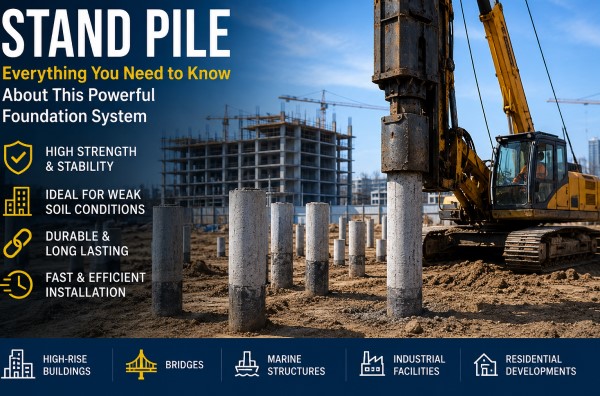
Stand pile systems have become an essential part of modern construction, particularly in projects that demand strength, stability, and long-term durability. From towering skyscrapers to bridges and industrial buildings, stand pile foundations play a crucial role in supporting structures built on weak or unstable ground. As cities continue to expand and construction projects become more complex, the demand for reliable foundation solutions has grown significantly.
A stand pile is a deep foundation element designed to transfer the load of a building or structure to stronger soil or rock layers beneath the surface. These piles are engineered to withstand immense pressure while preventing settlement, cracking, and structural instability. Construction experts widely use stand pile systems because they provide superior support in locations where shallow foundations would fail.
This article explores everything about stand pile foundations, including their types, advantages, installation process, applications, and the reasons why they are increasingly important in modern engineering.
Table of Contents
ToggleWhat Is a Stand Pile?
A stand pile is a long vertical structural component made from materials such as concrete, steel, timber, or composite materials. It is driven or drilled deep into the ground to provide support for heavy structures. The main purpose of a stand pile is to transfer the weight of a building from weak surface soils to stronger and more stable layers underground.
Stand piles are especially useful in areas with poor soil conditions, loose sand, clay, or waterlogged ground. Without a reliable deep foundation system, large structures could sink or become unstable over time.
Engineers determine the required depth and type of stand pile after conducting detailed soil investigations and site assessments. This ensures the foundation can safely support the expected load for decades.
How Stand Pile Foundations Work
Stand pile foundations function by transferring structural loads through weak soil layers to stronger strata beneath the surface. The pile either rests on hard rock or gains support through friction between the pile surface and surrounding soil.
There are generally two ways stand piles support structures:
End-Bearing Piles
End-bearing piles transfer the building load directly to a strong layer such as bedrock. The bottom of the pile acts like a column standing on solid ground.
Friction Piles
Friction piles rely on the friction generated between the pile surface and surrounding soil. These are commonly used when deep rock layers are unavailable.
In many projects, engineers use a combination of both systems to achieve maximum stability and safety.
Types of Stand Piles
Different construction projects require different stand pile solutions. The choice depends on soil conditions, budget, environmental factors, and structural requirements.
Concrete Stand Piles
Concrete stand piles are among the most common foundation systems used worldwide. They may be precast or cast in situ.
Precast Concrete Piles
These piles are manufactured off-site and transported to the construction location. They are highly durable and capable of handling heavy loads.
Cast-In-Situ Piles
These piles are formed directly at the site by drilling holes and filling them with reinforced concrete. They are suitable for locations with limited access or complex soil conditions.
Steel Stand Piles
Steel piles offer exceptional strength and are widely used in marine construction, bridges, and industrial projects. Their ability to penetrate hard ground makes them ideal for difficult environments.
Common steel pile types include:
- H-piles
- Pipe piles
- Sheet piles
Steel piles are resistant to high pressure and can be installed quickly.
Timber Stand Piles
Timber piles are one of the oldest foundation systems still in use today. They are generally used for lightweight structures and temporary projects.
Although timber piles are cost-effective, they are less durable compared to steel or concrete alternatives.
Composite Stand Piles
Composite piles combine multiple materials to achieve improved performance. For example, a pile may use steel in the upper section and concrete below ground level.
These systems are designed to balance durability, cost, and environmental performance.
Advantages of Stand Pile Foundations
Stand pile systems offer numerous benefits that make them a preferred choice in modern construction projects.
Exceptional Load Capacity
Stand piles can support extremely heavy structures, including high-rise buildings, bridges, and industrial facilities.
Improved Structural Stability
Deep foundation systems minimise settlement and prevent uneven movement of structures over time.
Suitable for Weak Soil
Stand piles allow construction on sites with poor ground conditions that would otherwise be unsuitable for development.
Resistance to Water Damage
Many stand pile systems perform effectively in wet or waterlogged areas, making them ideal for coastal and riverfront projects.
Long-Term Durability
Properly installed stand piles can last for decades with minimal maintenance.
Faster Construction
Modern piling equipment enables rapid installation, reducing project timelines significantly.
Stand Pile Installation Process
The installation process for stand piles involves several important stages to ensure safety and structural integrity.
Site Investigation
Engineers conduct soil testing and geological surveys to determine ground conditions. This step helps identify the appropriate pile type and depth.
Design and Planning
Based on soil data, engineers design the pile foundation system according to load requirements and project specifications.
Pile Installation
Different techniques are used depending on the pile type.
Driven Piles
Driven piles are hammered into the ground using specialised machinery.
Bored Piles
Bored piles are created by drilling holes into the ground and filling them with reinforced concrete.
Screw Piles
Screw piles are rotated into the soil using hydraulic equipment.
Load Testing
Engineers test selected piles to confirm they can safely support the intended structural loads.
Final Foundation Construction
Once the pile system is approved, the upper foundation and structure construction begin.
Common Applications of Stand Piles
Stand pile foundations are used across various industries and construction sectors.
High-Rise Buildings
Tall buildings require deep foundations capable of supporting enormous vertical loads.
Bridges
Bridge piers and supports rely heavily on stand pile systems for stability in rivers and coastal areas.
Marine Structures
Ports, docks, and offshore platforms commonly use steel and concrete stand piles.
Industrial Facilities
Factories, power plants, and warehouses often require deep foundations due to heavy machinery and equipment.
Residential Developments
Stand piles are increasingly used in housing projects built on soft or unstable ground.
Renewable Energy Projects
Wind turbines and solar farms also depend on pile foundations for long-term stability.
Factors Affecting Stand Pile Selection
Choosing the correct stand pile system involves several important considerations.
Soil Conditions
Different soil types require different pile solutions.
Structural Load
Heavier structures require stronger and deeper piles.
Environmental Conditions
Water levels, corrosion risks, and seismic activity influence pile design.
Budget Constraints
Material and installation costs vary significantly between pile types.
Project Timeline
Some pile systems allow quicker installation than others.
Environmental Impact of Stand Piles
Sustainability has become a major focus within the construction industry. Modern stand pile technologies aim to reduce environmental impact while maintaining structural performance.
Engineers now use eco-friendly materials and low-noise installation techniques to minimise disruption to nearby communities and ecosystems.
Recyclable steel piles and sustainable concrete mixtures are also becoming increasingly common.
Challenges Associated With Stand Piles
Despite their many advantages, stand pile systems can present certain challenges.
High Initial Costs
Deep foundation systems are generally more expensive than shallow foundations.
Noise and Vibration
Driven pile installation can create significant noise and ground vibration.
Complex Engineering Requirements
Pile foundations require careful design and expert engineering supervision.
Access Limitations
Some sites may have limited space for large piling equipment.
However, the long-term stability and durability provided by stand piles often outweigh these challenges.
Future Trends in Stand Pile Technology
The future of stand pile engineering is focused on innovation, efficiency, and sustainability.
Several emerging trends include:
- Smart monitoring systems for pile performance
- Advanced corrosion-resistant materials
- Automated piling equipment
- Environmentally friendly installation methods
- Improved geotechnical analysis software
As urban development continues worldwide, stand pile systems will remain essential for supporting safer and more resilient infrastructure.
Why Stand Piles Matter in Modern Construction
Modern cities rely heavily on strong foundations to support expanding infrastructure and growing populations. Without dependable deep foundation systems, many of today’s largest buildings and engineering achievements would not be possible.
Stand piles provide the strength, durability, and flexibility required for construction in challenging environments. They help engineers overcome poor soil conditions while ensuring structures remain safe for decades.
Whether used in skyscrapers, bridges, marine projects, or renewable energy developments, stand pile foundations continue to shape the future of global construction.
Conclusion
Stand pile systems are among the most reliable and effective foundation solutions available in modern engineering. Their ability to support heavy loads, resist environmental challenges, and provide long-term structural stability makes them essential for countless construction projects worldwide.
As technology advances and sustainability becomes increasingly important, stand pile foundations will continue evolving to meet the demands of future infrastructure. From urban developments to large-scale industrial projects, these deep foundation systems remain a cornerstone of safe and successful construction.
Understanding how stand piles work, their advantages, and their applications can help developers, engineers, and property owners make informed decisions when planning modern construction projects.